

Corporate security systems play a critical role in protecting people, assets, sensitive areas, and day-to-day operations. This completed three-part guide explores how organizations can modernize physical security, strengthen employee identification and access control, and build an integrated security strategy that supports both protection and operational efficiency.
Part 3 of 3 | Published: July 8, 2026 | Series Last Updated: July 31, 2026
When and How to Upgrade Corporate Security Systems
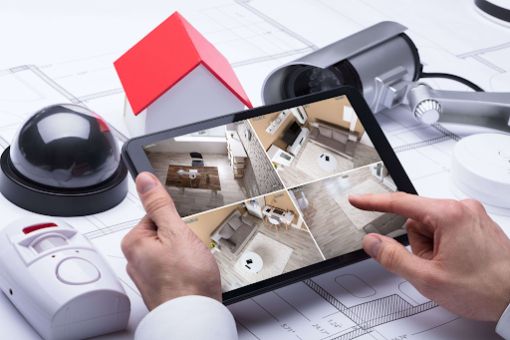
Corporate security systems are foundational to protecting your people, assets, and sensitive areas. However, the process of upgrading can feel overwhelming given the rapid evolution of security technology and the range of available options. As your company grows and modern threats evolve, the systems that once served you well may no longer support the way your team needs to work today. Understanding when and how to upgrade your business security system is critical to maintaining efficiency, accountability, and compliance.
This first section of our three-part guide to corporate and enterprise physical security will help you recognize the signs that your current security services may be outdated and guide you through building a compelling business case for modernization. Throughout this guide, we explore how today’s security technology, including AI-enhanced features, smart credential options, and integrated workflows, helps security teams work smarter without replacing the judgment and oversight that real security personnel bring to the table.
Signs Your Current System Is No Longer Doing Its Job
Regularly evaluating your security setup is essential to ensure it aligns with your business goals and operational requirements. Outdated systems leave gaps that expose your organization to risk, reduce efficiency, and complicate compliance. The following warning signs indicate it may be time to take a closer look.
Outdated Hardware That Limits What You Can Do
Older security hardware often lacks the flexibility and capability of modern solutions. Legacy access control panels, outdated security cameras, obsolete credentialing devices, and older motion detectors can restrict your ability to take advantage of newer features, scale your system, or maintain consistent performance across your facilities. When hardware can no longer support current security standards, integrate with newer tools, or run current software, it becomes a liability rather than an asset. Many businesses in this position find that maintaining aging equipment costs more in time and resources than a planned upgrade would.
This limitation shows up especially at entry points like loading docks, parking lots, and storage facilities, where outdated cameras and access control hardware struggle to provide the resolution, coverage, and integration capabilities that modern commercial security demands. If your system cannot capture clear footage after dark, log access events reliably, or provide enough storage space for video recordings, those are concrete operational shortfalls worth addressing.
 Systems That Cannot Be Managed Remotely or Across Locations
Many corporate organizations operate multiple sites and need the ability to manage security from anywhere. This inability to manage security remotely or across locations delays incident response and complicates oversight. A modern security system should give your team the bandwidth to monitor and manage security across all of your sites from anywhere, without requiring on-site presence at each location. Whether your team is across the office or across the country, the tools should work the same way and give you the same level of visibility and control.
Gaps in Visibility, Accountability, or Access Logging
Comprehensive visibility into who accesses your facilities, including restricted areas, and when is a cornerstone of effective corporate security. If your current system lacks detailed access logs, real-time video integration, or audit trails, it creates blind spots that undermine accountability and hinder incident investigation. These gaps increase security risks and make it difficult to meet compliance requirements. Enhanced monitoring capabilities, supported by today’s AI-enhanced search and notification features, close these gaps and improve your team’s ability to respond to and document security events efficiently.
Outdated Credential Technology
Proximity cards have been a workhorse of access control for decades, but the technology has not kept pace with the security threats organizations face today. A common card cloner purchased online can copy a proximity card from close range, giving an unauthorized individual a working credential without ever needing to steal the original. Upgrading to encrypted smart card credentials closes this vulnerability because the encryption prevents cloning. Smart cards, combined with 2FA at access-controlled doors and biometric ID options, represent one of the most impactful security upgrades many organizations can make.
If your facility is still operating on proximity cards or legacy badge formats, that is a meaningful signal that your credential technology has fallen behind what is available today.
Support That Has Become Unreliable or Unavailable
As security systems age, vendor support and maintenance services may diminish or cease entirely. Relying on unsupported hardware and software increases the risk of system downtime and complicates troubleshooting efforts. This is one of the more quietly costly aspects of an aging security setup since problems that would be resolved quickly with active support instead consume significant staff time or go unresolved. Reliable, ongoing technical support is essential to keeping your security system operational and adaptable as your company grows.
What a Modern Corporate Security System Should Be Able to Do
Upgrading your corporate security system should leverage today’s technology to strengthen your security posture, enhance how your team operates, and provide scalable, integrated solutions tailored to your business. Effective security measures protect employees, assets, and sensitive areas from evolving potential threats, and the best modern systems do this while giving your team better tools to work smarter rather than asking them to manage more complexity.
Integrated Access Control Across Your Facility
Modern access control systems unify credential management, door hardware, and policy enforcement into a cohesive platform. This integration enables immediate updates to user permissions, role-based access restrictions, and streamlined administration across every access point in your facility. Whether your organization operates a single building or multiple campuses, integrated access control ensures consistent security policies and reduces reliance on physical keys, improving both security and operational flexibility. From executive offices to server rooms, loading docks to parking areas, a properly designed access control system gives you precise control over who can go where and when.
When paired with 2FA, smart card credentials, and biometric verification, access control becomes a genuinely layered system that holds up even when a single credential is compromised. The combination of these layers is what makes modern access control meaningfully stronger than the systems many organizations are still operating today.
Video Surveillance With AI-Enhanced Features
Integrating security cameras with your access control system is one of the most impactful steps in a corporate security upgrade. When these systems work together, access events can be correlated with corresponding video footage, giving security personnel a synchronized view of who entered, when, and what it looked like at the time. This integration reduces false alerts by providing visual context for access events, supports faster incident investigation, and creates a documented record that is invaluable for internal reviews, compliance audits, and dispute resolution.
Today’s AI-enhanced video surveillance features take this further by helping security staff work smarter, not by automating decisions for them. AI-driven object detection, automated tracking that follows a person or vehicle as they move from one camera to the next, and smart search tools that let users locate footage using simple descriptive terms are all features that enhance what the security team can do. They reduce manual search time, surface relevant information faster, and free staff to focus on judgment and response. The human at the wheel remains central. AI is the tool that helps them get more value from the data their cameras are already collecting.
Reliable Employee Identification and Credentialing
Credentialing solutions that support various formats, from proximity cards to encrypted smart cards to mobile credentials to biometric verification, are essential for secure and convenient employee identification. Reliable ID card issuance and management systems keep credentials current, reduce the risk of unauthorized access, and simplify onboarding and offboarding processes. This ensures that access privileges align accurately with employee roles and responsibilities, and that your organization can respond immediately when credentials need to be issued, updated, or revoked.
The shift from proximity cards to smart card technology has been one of the more meaningful upgrades for corporate environments. Smart cards encrypt credential data so they cannot be cloned, addressing a real and growing vulnerability in legacy badge systems. For organizations that handle sensitive information or operate in higher-risk environments, this upgrade alone can dramatically strengthen the security posture.
Centralized Management With Scalable Options
A modern security system should integrate with your existing infrastructure and offer management capabilities that scale with your organization. Whether deployed on-premises or in the cloud, a modern security platform gives your team the ability to monitor activity, run reports, and configure settings across all of your sites from any authorized device, without being locked to a single physical location or requiring separate logins for each facility. Scalability ensures your security setup can grow alongside your company without requiring a complete overhaul each time your needs change.
Cloud vs. On-Premises: What Corporate Organizations Are Choosing
Choosing between cloud-based and on-premises platforms is a critical decision when modernizing your corporate security system. Both approaches offer distinct advantages depending on your operational priorities, compliance requirements, and existing infrastructure.
Why Many Organizations Are Moving Toward Cloud-Based Platforms
Cloud-based security platforms provide flexibility, remote accessibility, and simplified updates. They allow security teams to manage access control and video surveillance from any location, while offering scalable storage options for video recordings and data without requiring significant on-site IT infrastructure. Cloud storage protects your data against on-site hardware failures and enables remote management of your security systems from anywhere with an appropriate authorization level. These benefits make cloud platforms a strong starting point for corporate organizations looking to stay ahead of modern threats while reducing their on-premises technology footprint.
Where On-Premises Still Makes Sense
On-premises solutions remain the right fit for organizations with strict data control policies, regulatory mandates, or limited internet connectivity. Hosting security management locally allows companies to retain full control over their data and infrastructure. On-premises deployments can also be extensively customized to meet unique security needs and integrate with existing infrastructure that the organization has already invested in. For many corporate environments, an on-premises or hybrid approach is simply the better fit based on how they operate.
How to Evaluate the Right Fit for Your Organization
Determining the best platform requires an honest assessment of your company’s security goals, compliance landscape, IT capabilities, and budget. Consider factors such as data sovereignty, system scalability, integration requirements, and long-term support expectations. A knowledgeable solutions partner can help you navigate these considerations and select the platform that aligns with your operational and security strategy rather than defaulting to a one-size-fits-all recommendation.
How to Build a Business Case for a Security Upgrade
Securing stakeholder buy-in and budget approval for a corporate security upgrade requires a well-constructed business case. For many business owners and operations leaders, the challenge is not recognizing that an upgrade is needed but demonstrating its value in terms that resonate with finance and leadership teams.
Documenting Current Gaps and Risks
Start by conducting a thorough assessment of your existing security setup to identify vulnerabilities, outdated components, and operational inefficiencies. Document specific incidents, near misses, or compliance issues that illustrate the risks of maintaining the current system. Quantifying these gaps in concrete terms, such as hours lost to manual processes, incidents that could not be investigated due to insufficient footage, or access events that were not logged, demonstrates the urgency and necessity of an upgrade more effectively than general statements about security risk.
Aligning the Upgrade to Operational and Compliance Goals
Position the security upgrade as a strategic initiative that supports broader organizational objectives rather than a reactive expenditure. Enhanced security protects your business from evolving threats, improves employee safety, safeguards assets, streamlines operations, and supports compliance with industry regulations. Showing how a modern security system addresses specific operational and compliance goals strengthens the case for investment and connects the upgrade to outcomes that leadership already cares about.
There is also growing recognition that physical security plays an important role in protecting against threats that originate in the cybersecurity space. As organizations strengthen their digital defenses, security incidents are increasingly involving physical access as the entry point. An employee badge, a server room door, or a visitor management process can all be the difference between a contained incident and a serious breach. This intersection between physical and digital security strengthens the case for keeping your physical security infrastructure current and capable.
Organizations with professionally installed commercial security systems also frequently benefit from improved insurance premium discussions with their providers, since documented security infrastructure can support conversations about risk reduction.
Understanding Total Cost of Ownership vs. Upfront Cost
Beyond initial purchase and installation expenses, consider ongoing maintenance, support, scalability, and the potential cost savings from reduced security incidents, recovered productivity, and streamlined administration. Presenting a comprehensive view of total cost of ownership helps stakeholders appreciate the long-term value of a modern security system compared to the continuing cost of maintaining an outdated one.
Where to Start the Upgrade Process
Taking a structured approach to upgrading your corporate security system ensures your investment addresses specific needs and delivers measurable results. Engaging security experts to conduct a professional assessment is the most effective starting point.
The Value of a Security Needs Assessment
A professional security needs assessment provides a detailed analysis of your current infrastructure, vulnerabilities, and potential threats. This foundation guides the design of a tailored security solution aligned with your operational goals and risk profile. Rather than starting with a product catalog and working backward, the assessment starts with your actual environment and identifies where resources will have the greatest impact. This thorough assessment approach also gives you the documented analysis you need to support the business case internally.
Working With a Solutions Partner vs. a Product Vendor
Partnering with a solutions provider who offers end-to-end services, from analysis and design through installation and ongoing support, ensures comprehensive protection and reliable system performance. Unlike product vendors or resellers who sell standalone equipment and step away, a solutions partner remains invested in your long-term success. The difference shows up most clearly when your needs evolve, when integration challenges arise, or when you need to scale the system to accommodate growth.
How Our Team Approaches Corporate Security Modernization
Our team delivers integrated access control, video surveillance, and credentialing solutions that work together to support how your security team operates, with options tailored to organizations ranging from small businesses to large enterprise environments. We collaborate closely with customers throughout the entire lifecycle, providing expert guidance, professional installation, comprehensive training, and responsive ongoing support. Offering both cloud and on-premises platforms, we help customers evaluate the right fit based on their unique needs and goals rather than defaulting to a single approach.
Our solutions incorporate the AI-enhanced features that today’s security teams use to work smarter, including smart credential technology, 2FA at access points, biometric ID options, AI-driven video search and tracking, and integrated workflows that help personnel respond to events faster and more accurately. These features are not replacements for your security team, but rather the tools that make your team more effective.
Schedule a Discovery Call
If you are ready to explore how a modern corporate security system can strengthen your organization’s protection and operational efficiency, fill out our interest form, schedule a 15-minute discovery call, or speak with a solutions specialist directly. You can also reach our team by phone at 888-345-8511 or email identity@elliottdata.com.
The next section dives deeper into how employee ID badging and access control have evolved, including how smart credential technology and AI-enhanced ID issuance support both security and operational goals.
Employee ID Badging and Access Control for Corporate Organizations
In corporate environments where security, efficiency, and compliance are paramount, employee ID badging and access control systems form the backbone of physical security programs. These systems do more than identify personnel. They regulate access to sensitive areas, promote accountability, and streamline operations across your facility. As organizations grow and evolve, the right employee ID badge system becomes essential, incorporating credential technologies such as encrypted smart cards, RFID, biometric IDs, and mobile credentials that serve as access badges for secure entry.
Today’s employee ID badge systems also support how teams work smarter, with AI-enhanced features in ID issuance, integrated workflows that connect HR processes to access management, and credential technologies that close real security vulnerabilities legacy systems left open. This article explores how employee identification integrates with access control in corporate settings and highlights the solutions that enable scalable, secure, and manageable credential programs.
Why Employee Identification Is the Foundation of Corporate Security
Every effective corporate security program begins with reliable employee identification. An employee ID badge system serves as the primary credential that authenticates individuals within your organization, linking identity to access privileges and accountability requirements. Proper identification is more than a visual cue. It is a critical control point that supports broader security goals and creates the documented foundation on which access control, visitor management, and audit compliance all depend.
What an ID Badge System Does in a Corporate Environment
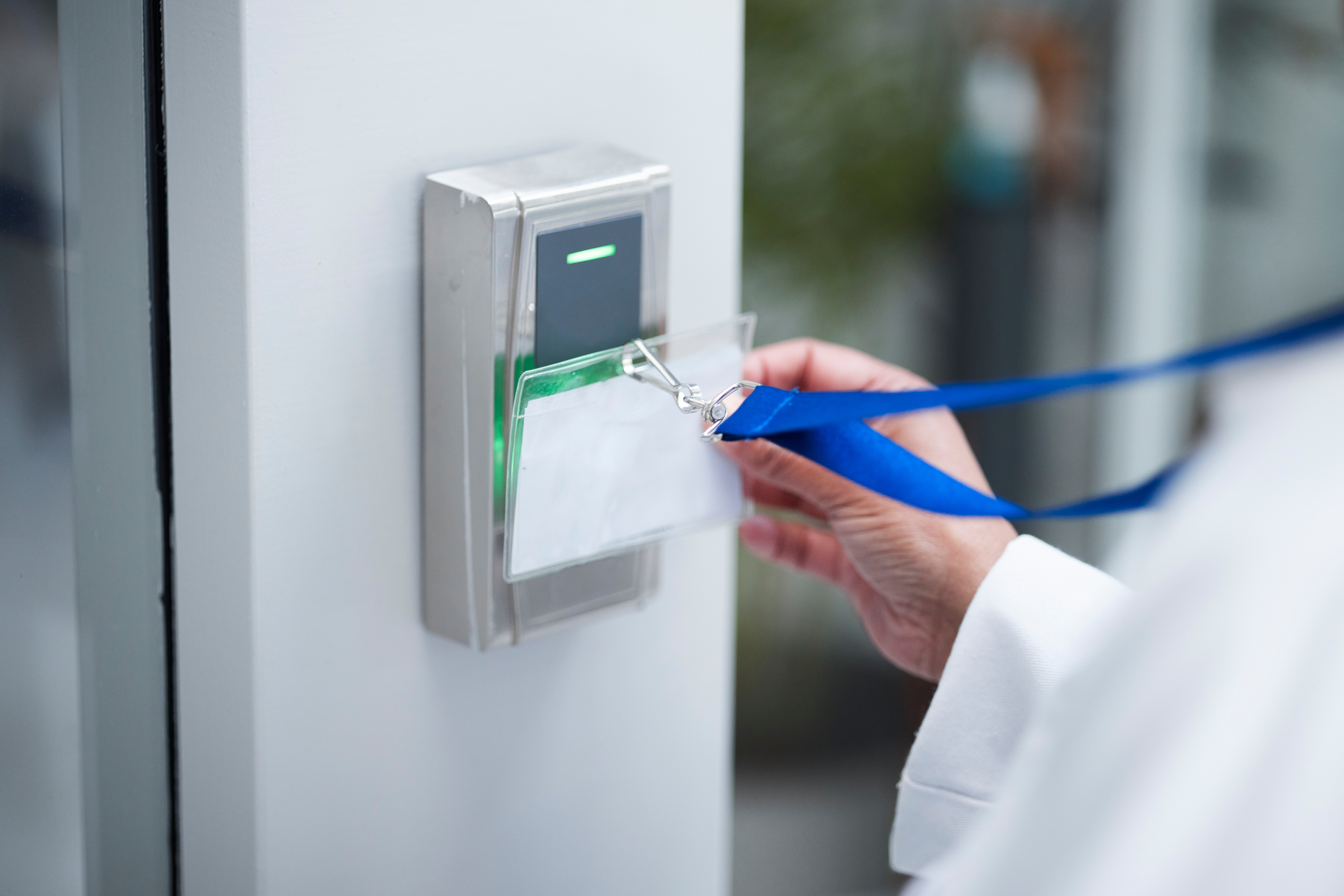
In a corporate setting, an employee badge system issues physical or digital credentials containing identifying information such as the employee’s name, photo, and unique ID number. Access badges may also include barcodes, QR codes, or embedded chip technology that enables secure entry to specific areas and supports accountability tracking. These credentials enable employees to be recognized instantly and function as the key to authorized premises and resources.
Beyond simple identification, employee ID badges integrate with access control technologies to enforce permissions, track movement throughout a facility, and support accountability functions such as recording who accessed a restricted area and when. This integration transforms a visual ID into an active component of your security infrastructure.
How Identification Connects to Access, Accountability, and Compliance
Identification links directly to access control by granting or restricting entry based on predefined permissions tied to each employee badge. This connection ensures that only authorized personnel can enter sensitive areas, helping to protect company resources and sensitive information. The system also creates audit trails that record access events, which are essential for accountability and regulatory compliance. These logs support investigations, inform security reviews, and demonstrate adherence to security policies when compliance documentation is required.
There is also a connection between credential management and employee accountability that extends beyond security. Pairing employee badges with video surveillance provides validation that the person presenting a credential is the person assigned to it, which supports both security goals and HR objectives around accurate time tracking and accountability. This is one of the often-overlooked operational benefits of an integrated badging and access control program.
Why ID Issuance Is Often the Entry Point Into a Broader Security Program
Issuing employee badges frequently marks the first step in implementing a comprehensive corporate security framework. Once an employee ID badge system is in place, organizations can expand capabilities to include visitor management, 2FA at access-controlled doors, biometric verification, and integration with video surveillance and access control systems. This foundation facilitates modernization, operational efficiency, and a unified approach to physical security that scales as the organization grows.
Types of Corporate ID Badging Solutions
Corporate organizations have multiple options when selecting ID badging solutions, each offering distinct advantages depending on operational needs, workforce size, and security requirements. Understanding these options helps ensure the right solution for your specific environment.
Printed ID Cards and On-Site Issuance Systems
 Printed ID cards remain a popular choice for employee badges, offering tangible credentials that can incorporate photos, barcodes, magnetic stripes, or smart card chips. On-site issuance systems allow organizations to produce badges internally using ID card printers and ID card software, providing full control over card design, credential encoding, and issuance speed. This approach supports customization and enables immediate replacement of lost or damaged badges without depending on an outside vendor.
Encoding options vary significantly in security level. Proximity cards offer basic access functionality but rely on technology that can be cloned with a common card cloner purchased online, creating a real security vulnerability for organizations that still use them. Encrypted smart cards use cryptographic technology that prevents cloning, dramatically reducing the risk that a moment of proximity to a bad actor can result in a compromised credential. For organizations evaluating their security strategy, upgrading from proximity cards to smart cards is one of the most impactful improvements available.
Physical badge systems require ongoing maintenance to remain reliable, including replacing worn-out cards, maintaining ID card printers with regular cleaning using manufacturer-recommended cleaning kits, and ensuring printer hardware and supplies remain stocked to support continuous issuance.
Biometric ID Cards and Layered Credential Options
For organizations that need an additional layer of credential security, biometric ID cards combine the convenience of a traditional badge with the verification power of biometrics. These cards require a fingerprint or other biometric input from the cardholder for the credential to work at the reader, meaning that even if the card is lost or stolen, it cannot be used by anyone other than the assigned employee.
Biometric credential options represent one of the more powerful examples of how small changes in credential technology can deliver outsized security improvements. The cost difference is often modest, but the security benefit is substantial.
Digital and Mobile Credentials
Digital credentials accessed via smartphones or other mobile devices provide a contactless complementary alternative to physical cards that aligns with the mobility expectations of modern workplaces. These mobile credentials leverage NFC or Bluetooth technology to grant access, allowing employees to use their device as their credential at any compatible reader in environments where displaying a visual ID isn’t required.
Digital access badges enhance convenience and can be issued, updated, or revoked instantly, which is especially valuable for organizations managing large or frequently changing workforces. They provide an additional option alongside physical ID cards while maintaining the same access control enforcement, audit trail generation, and permission management that printed credentials provide.
Cloud-Based vs. On-Premises ID Issuance Platforms
ID issuance platforms can be deployed on-premises or hosted in the cloud, and the right choice depends on your organization’s operational priorities and existing infrastructure.
On-premises solutions give organizations direct control over their data and infrastructure, which is important for environments with strict compliance requirements or data sovereignty policies. Our on-premises ID issuance options include robust platforms that support both direct-to-card and retransfer printing with the flexibility to customize card design, credential type, and integration with access control systems.
Cloud-based platforms offer flexibility, scalability, and remote management capabilities that reduce the burden on internal IT resources and make distributed credential management practical. Our cloud ID issuance options include IIDaaS (Instant ID as a Service), which supports both printed and digital credential issuance from a cloud or hybrid platform, and BadgeHub, a cloud-based platform built for streamlined ID issuance and management. Both platforms support web-based administration, enabling managers to issue, update, and revoke credentials across multiple locations without being on-site.
AI-Enhanced Remote Photo Capture for Distributed Workforces
For organizations with employees in multiple locations who need credentials issued without traveling to a central office, RemotePhoto provides an AI-driven solution that enables individuals to submit a smartphone photo from any location. The AI capability automates the process of verifying that the submitted photo meets the quality and authenticity requirements for credential use, supporting HR and operations teams in maintaining accurate, current credentials across large or distributed workforces.
This is a meaningful example of where AI enhances how teams work without replacing them. HR retains oversight of the credentialing process, but the AI handles the repetitive verification steps that would otherwise slow the process down. For hospitals, large enterprises, and organizations with multi-location operations, this AI-enhanced workflow can dramatically streamline credential issuance while maintaining quality standards.
Connecting ID Badging to Access Control
The full value of an employee ID badge system is realized when credentials are integrated with access control systems that enforce security policies and manage permissions dynamically across every entry point in your facility.
How Credentials Tie Into Door Access and Permissions
Employee badges function as credentials that communicate with door readers to grant or deny access based on assigned permissions. This connection ensures that employees can only enter areas appropriate to their role, reducing risks associated with unauthorized access to restricted areas. The badge access system can support multiple credential technologies depending on security needs, and administrators can manage all credential types from a centralized platform.
Smart card chips support encrypted communication between the credential and the reader, providing a stronger level of verification than legacy magnetic stripe technology. Combined with 2FA at the door, where the credential is paired with a smartphone verification or biometric input, the access control layer becomes meaningfully more resistant to compromised credentials and unauthorized access attempts.
Two-Factor Authentication at Access-Controlled Doors
 2FA at access-controlled doors adds a second authentication factor beyond the physical credential, typically requiring confirmation through a smartphone or biometric verification. This is one of the most impactful security improvements available to corporate organizations because it stops a category of incidents that traditional access control cannot.
If an employee badge is stolen and an unauthorized individual attempts to use it at a 2FA-enabled door, the legitimate cardholder receives a verification request on their phone in real time. They can deny the request, alerting them that their credential has been compromised, and the access attempt is blocked. The combination of smart card encryption preventing cloning, 2FA stopping stolen-credential attempts, and integrated ID issuance allowing instant credential revocation creates a layered defense that is significantly stronger than any single component.
Managing Multi-Department and Multi-Site Access
In complex corporate environments with multiple departments, restricted areas, or locations, managing access requires a system capable of handling diverse permission structures and administrative hierarchies. An effective employee badge system is integrated to allow administrators to assign access rights tailored to each employee’s role, department, and location, simplifying management while maintaining security across all premises.
Badge access control systems also provide valuable data on space utilization, giving organizations insight into how physical spaces are actually being used across single or multiple sites. This data can inform decisions about facility layout, staffing, and resource allocation, extending the operational value of the credentialing investment beyond security alone.
Updating and Revoking Access When Roles Change
Employee roles and responsibilities evolve, making it critical to update access permissions promptly when changes occur. An employee badge system must support swift modification or revocation of access rights to prevent former employees or those changing roles from retaining inappropriate access. The ability to instantly control access, whether adding permissions for a new hire, adjusting access for a role change, or immediately revoking credentials during an offboarding, is one of the most operationally important capabilities a credentialing system can offer.
What Corporate Organizations Should Look for in an ID and Access Solution
Choosing the right employee ID badge system and access control solution involves evaluating features that align with your organizational size, workforce complexity, and operational goals.
Scalability for Large or Growing Workforces
Corporate organizations require solutions that scale seamlessly as their workforce expands. Scalable systems support thousands of credentials across multiple sites without sacrificing performance or manageability. For organizations experiencing growth, mergers, or facility expansions, this scalability ensures that the credential and access control program remains a reliable foundation rather than a bottleneck.
Supporting HR Processes and Existing Infrastructure
Integrated security solutions provide capabilities that support human resources and existing security infrastructure to streamline operations by automating badge issuance and access management based on employee data. When onboarding includes credential creation and offboarding triggers revocation, the efficiency and prevention of security vulnerabilities significantly. Using integrated, automated solutions to swiftly and efficiently implement these processes by security and HR teams frees up more time to focus on higher-priority work.
HR teams in particular benefit from the operational visibility that integrated badging and access control provides. Validating that the person scanning in is the person assigned to the credential, maintaining accurate identification records across a distributed workforce, and supporting accurate time and attendance data are all valuable byproducts of a well-integrated system.
In-House Printing vs. Outsourced Issuance
Deciding between in-house badge printing and outsourcing involves weighing control, cost, turnaround time, and security. In-house printing using platforms like IIDaaS offers immediacy and customization, enabling same-day badge production for new hires or replacements. It also keeps credential data and card design fully within the organization’s control. Outsourcing can provide economies of scale for high-volume programs but introduces dependency on external timelines and reduces immediate responsiveness when credentials need to be replaced quickly.
Visitor Management as an Extension of Your Credentialing Program
Visitor management is a critical component that complements employee credentialing, extending the same security discipline to everyone who enters your facility, not just your permanent workforce.
Why Visitor Badging Belongs in the Same System
Incorporating visitor badges into the same credentialing system as employee ID badges ensures consistency and simplifies management. Security teams can differentiate visitors from employees instantly and apply appropriate access restrictions, maintaining a secure environment without creating a parallel administrative burden. When a visitor credential is issued through the same platform that manages employee access, the audit trail is unified and the permission controls are consistent.
Temporary Credentials and Access Controls for Non-Employees
Visitor badges grant temporary access aligned with the visitor’s purpose and duration of stay. These credentials are time-limited and restricted to certain areas, reducing risk while enabling necessary access for contractors, partners, or guests. The ability to issue, manage, and revoke temporary access quickly, and to see in real time who is on premises during any given period, is especially important for organizations managing high-security environments or regulatory compliance requirements.
How Our Team Supports Corporate ID and Access Control Programs
Our team delivers employee ID badge systems and access control solutions that meet the unique demands of corporate organizations, from single sites to complex enterprise environments.
Solutions That Scale From One Location to Enterprise
We design and implement scalable credentialing solutions that grow with your organization, ensuring consistent security and operational efficiency regardless of size or complexity. Whether you are issuing credentials to a team of fifty or managing tens of thousands of active employees across multiple facilities, our platforms and professional services are built to handle the scope.
The Hardware and Software Platforms We Work With
Our integrated approach combines industry-leading ID card printer hardware including Entrust, Kanematsu, Swiftcolor, and BadgeHub with flexible software platforms including IIDaaS, Identity Manager, and other cloud and on-premises options. This combination ensures seamless operation and centralized management of your credentialing and access control systems, with the flexibility to match the platform to your environment rather than requiring you to adapt your environment to a fixed platform.
We also support biometric credential options, encrypted smart card technology, 2FA at access points, and the AI-enhanced features that help today’s security and HR teams work smarter, including RemotePhoto for distributed workforce credentialing.
Speak With a Solutions Specialist About Your Program
Understanding your specific security needs is the first step toward building a tailored employee ID badge system. We invite you to fill out our interest form, speak with a solutions specialist, or schedule a 15-minute discovery call to explore options, discuss scalability, and identify the right solution for your corporate environment. You can also request a demo or contact our team directly at 888-345-8511 or identity@elliottdata.com.
For a broader view of corporate security, see the section above on recognizing the need for a security upgrade and building the internal business case for modernization. The final section below brings together ID badging, access control, and video surveillance into an integrated physical security strategy.

Building an Integrated Physical Security Strategy for Your Business
Developing a cohesive physical security strategy is essential for businesses aiming to protect their people, assets, and operations. Integrated security systems serve as a cornerstone of commercial security and business protection, playing a vital role in safeguarding employees, sensitive areas, and business operations across organizations of all sizes. An integrated security system for businesses goes beyond installing individual devices. It involves thoughtfully combining access control, video surveillance, employee identification, visitor management, and supporting credential technologies into a security program that gives your team the tools to work smarter while keeping the human at the wheel.
This integrated approach enhances protection and supports operational efficiency. In this final section of our guide to corporate and enterprise physical security, we explore how to build and implement a comprehensive security strategy that combines the right components with the right technology, including AI-enhanced features, smart credential options, 2FA, and biometric verification, into a layered defense that addresses real threats.
Why a Strategy Comes Before the Technology
A successful security program begins with a clear strategy rather than jumping straight to product decisions. Without a well-defined plan, organizations risk investing in disconnected systems that fail to deliver the comprehensive protection and visibility required to address their unique security challenges. Commercial security systems and business security systems must be carefully designed to manage security across diverse environments, from warehouses and retail spaces to corporate campuses and multi-tenant commercial buildings.
The Difference Between Buying Security Products and Building a Security Program
Purchasing security products piecemeal often leads to fragmented systems that operate independently, creating blind spots and inefficiencies that grow more costly over time. Building a security program, however, involves aligning technology choices with organizational goals, regulatory requirements, and operational workflows. This approach ensures that components such as access control, video surveillance, and employee credentialing work together to provide comprehensive protection and actionable insights.
Tailored security measures, including encrypted smart cards, biometric access control, AI-enhanced cameras, 2FA at sensitive entry points, and integrated credential management, are essential for addressing evolving threats and meeting the specific operational requirements of your environment. A custom system built around your actual needs and existing infrastructure will outperform a generic off-the-shelf deployment in both effectiveness and long-term value.
The Connection Between Physical and Digital Security
One important reason to build a real security strategy rather than treating physical security as a checkbox is the growing recognition that physical and digital security are interconnected. As cybersecurity defenses have improved at blocking digital intrusions, attackers have increasingly shifted to physical methods of gaining initial access. There have been documented cases of intruders physically posing as IT staff to install malware on corporate systems, bypassing strong digital defenses through weak physical access controls.
This makes layered physical security, starting with reliable employee identification and extending through access control, video surveillance, and visitor management, an essential complement to cybersecurity rather than a separate concern. The strongest security programs treat physical and digital security as parts of the same overall defense, with each reinforcing the other.
What Happens When Organizations Skip the Planning Stage
Skipping the planning stage results in incompatible hardware and software, redundant systems, and increased administrative burdens. Disconnected security components hinder coordinated responses, leaving organizations vulnerable to security incidents and operational disruptions. False alerts increase when systems cannot share context, wasting security personnel time and creating response fatigue.
Integrated security systems with video verification reduce false alerts by confirming incidents with visual context and providing real-time alerts that security teams can act on with confidence.
Who Should Be Involved in the Planning Process
Developing an integrated physical security strategy requires input from across the organization. Security directors, IT leaders, facilities managers, HR teams, compliance officers, and operational executives should all contribute their perspectives. HR involvement is particularly important because the same credentialing and identification systems that support security also support workforce management, including accurate identification, accountability, and operational visibility. Bringing in security experts and a qualified solutions partner at the start of this process ensures that best practices are followed and that the design reflects how the systems will actually be used.
The Components of an Integrated Physical Security Strategy
A robust integrated security system for businesses relies on multiple interconnected components that collectively enhance protection and operational control.
Access Control as the Foundation

Access control systems regulate entry to facilities and sensitive areas, establishing the foundation of physical security. Modern access control includes cloud-based platforms and mobile access options that offer flexible management for businesses at any scale. Credentials including encrypted smart cards, RFID, mobile credentials, and biometric authentication ensure that only authorized personnel can reach designated areas.
Smart card technology represents a meaningful upgrade over proximity cards because the encryption prevents cloning, addressing a real vulnerability that affordable card cloning equipment has made widespread. Combined with 2FA at access-controlled doors, where the credential is paired with smartphone verification or biometric input, access control becomes a layered defense that holds up even when a single credential is compromised.
Cloud-based access control enables remote management of permissions and real-time monitoring of access events from any authorized device, making it practical to maintain consistent access policies across multiple locations without requiring on-site administration at each facility.
Video Surveillance With AI-Enhanced Features
Video surveillance systems provide real-time and recorded visual monitoring, delivering visibility into business operations across every entry point, corridor, and critical space. Modern cameras can be positioned for comprehensive coverage with high-resolution imaging, night vision, wide-angle coverage, and AI-enhanced analytics that help security teams identify and respond to events more efficiently.
The AI-enhanced features in today’s video surveillance are designed to support how security personnel work, not replace them. Automated object detection, smart tracking that follows a subject across multiple cameras automatically, license plate recognition with night vision enhancement, and AI-driven smart search that lets users locate specific footage using simple descriptive terms are all features that give security teams faster access to relevant information. The team still reviews the footage, makes the decisions, and takes the action. The AI just gets them to the right information faster.
When integrated with access control, video surveillance creates a coordinated security environment where access events and corresponding footage support faster incident response and stronger documentation. Cloud storage options make it practical to retain and access video history remotely, while on-premises storage remains available for organizations with specific data control requirements.
Employee Identification and Credentialing
Business customers rely on robust credentialing systems to authenticate individuals and assign appropriate access rights throughout their facilities. These systems ensure that only authorized personnel can enter designated areas, supporting accountability and reducing the security vulnerabilities associated with lost, shared, or outdated credentials.
Protecting intellectual property, sensitive data, and proprietary operations begins with knowing exactly who is in your facility and what they are authorized to access. A well-managed credentialing program, supported by platforms like IIDaaS and BadgeHub and connected ID card printer hardware, creates the documented identity foundation on which every other security layer depends. Biometric credential options and encrypted smart card technology further strengthen this foundation by closing the credential vulnerabilities legacy systems leave open.
For organizations with distributed workforces, RemotePhoto provides an AI-enhanced solution for credential photo capture that allows employees to submit photos from any location while the AI handles the verification steps that confirm photo quality and authenticity. This supports both security and HR objectives, particularly for hospitals and large multi-location organizations where in-person credentialing is impractical.
Visitor Management and Non-Employee Access
Visitor management solutions track and control non-employee access to commercial buildings, maintaining security without impeding business operations. By integrating visitor data with access control and video surveillance, organizations gain comprehensive oversight of all individuals on-site at any given time.
Temporary credentials issued through the visitor management system can be time-limited and restricted to specific areas, ensuring that guests, contractors, and partners receive precisely the access they need, and nothing more. Security personnel can monitor visitor access in real time and respond immediately if a visitor enters an unauthorized area or a credential is presented outside of its permitted window.
Accountability Tracking and Operational Data
An integrated security system generates data that extends beyond security into operational intelligence. Access logs, video analytics, and credential activity combine to create a detailed record of facility use, supporting compliance audits, investigations, and resource planning. Organizations can analyze how spaces are used across departments, track foot traffic at key entry points, and measure access patterns that inform both security and operational decisions.
The AI-enhanced features in modern security platforms make this data significantly more accessible. Rather than requiring analysts to manually pull and correlate data from multiple sources, today’s platforms surface insights that security and operations teams can use to make better decisions about their facilities, their staffing, and their operational priorities. This is one of the most valuable aspects of modernizing a security infrastructure: the same systems that protect your business also help you understand it better.
Concealed Weapons Detection for High-Traffic Entry Points
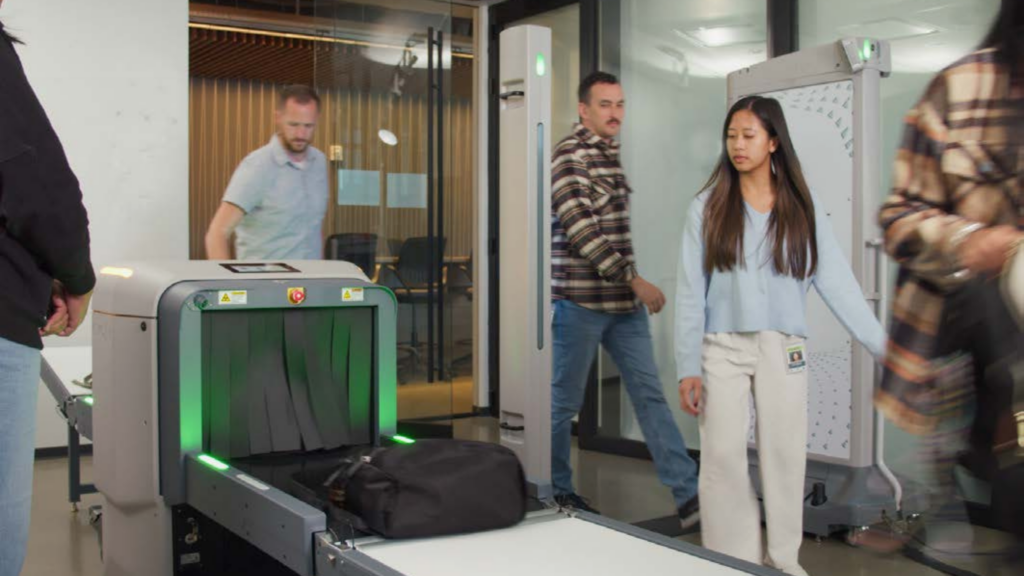 For organizations managing high-traffic public entry points, such as corporate campuses, educational institutions, healthcare facilities, large commercial buildings, courthouses, and event venues, concealed weapons detection provides an additional layer of security at facility entrances. Systems like Evolv are designed to screen individuals efficiently without disrupting the flow of authorized personnel, enabling security teams to identify potential threats at the point of entry rather than after the fact.
These systems incorporate AI-enhanced features that track activity data, identify patterns over time, and generate insights about traffic flow and screening activity that support both security and operational planning. Integrated with access control and video surveillance, concealed weapons detection creates a comprehensive entry checkpoint that addresses one of the toughest security challenges modern commercial organizations face.
Designing the Integration Architecture
An effective integrated security system is designed with a layered architecture that enables coordination among components without requiring everything to be controlled from a single dashboard. This architecture supports both fully integrated environments where customers want centralized management and layered, defense-in-depth environments where access control, video surveillance, and credentialing systems work in coordination through AI-enhanced features and well-trained security teams.
Why Hardware and Software Compatibility Matters
Ensuring hardware and software compatibility is critical to making integrated security work, particularly when combining multiple systems across existing infrastructure. Selecting components that communicate through common protocols and support data sharing enables coordinated responses across systems. Compatibility also simplifies maintenance and future upgrades, protecting the long-term value of the investment.
Two Effective Approaches: Fully Integrated and Layered Defense
Some organizations benefit from a fully integrated security environment where access control, video surveillance, and credentialing are managed from a centralized platform with unified workflows. This approach delivers maximum automation in incident response and is well suited to organizations that prioritize centralized management.
Other organizations get better results from a layered, defense-in-depth approach where these systems operate more independently but work together effectively through AI-enhanced features, smart credential technology, 2FA, and well-trained security teams. In this model, the systems are not centrally controlled from a single dashboard, but the layered combination of encrypted credentials, 2FA at access points, AI-driven video search and tracking, integrated ID issuance, and mobile access to security platforms creates a security environment that performs effectively in real-world scenarios.
Both approaches have value. The right choice depends on your organization’s size, complexity, operational preferences, and long-term strategy. Many organizations end up somewhere in between, using integrated software where it makes the most sense and operating other components in coordination through advanced features.
Planning for Scalability Across Sites and Departments
Scalable solutions are essential for organizations managing multiple locations, growing workforces, or evolving security requirements. A scalable integrated security system accommodates growth across multiple locations and organizational units without requiring a full rebuild each time the organization changes. Early planning includes anticipating future needs such as multi-site management, departmental access hierarchies, and expanded camera coverage, so the architecture can grow without costly overhauls.
Implementation: What the Process Should Look Like
Implementing an integrated physical security strategy involves a structured process that ensures alignment with organizational goals and smooth adoption across all stakeholders.
Security Needs Assessment and Solution Design
The process begins with a thorough security needs assessment, where our team collaborates with stakeholders to understand the unique challenges, goals, and existing infrastructure of each commercial property. Based on this evaluation, we design a custom system that integrates hardware and software components tailored to the specific needs of your business environment. This includes assessing how many cameras, access points, and credential management components are needed, how they will integrate with your existing infrastructure, and what management and reporting capabilities are required to meet your operational and compliance goals.
Integration, Installation, and Staff Training
Following design approval, professional installation ensures all components are configured correctly and that integration across systems is fully functional before the facility begins relying on it. Our technicians coordinate the installation process to minimize operational disruption, and comprehensive staff training follows to ensure that security personnel and administrators are confident and capable users of every component in the system.
Training matters more than ever now that AI-enhanced features are part of modern security platforms. The teams that get the most from these systems are the ones whose personnel are trained to use the AI-driven search, tracking, and notification features effectively, treating them as tools that support their work rather than mysterious automation they have to trust without understanding.
Ongoing Support, Maintenance, and System Updates
Long-term success depends on continuous support and maintenance. Our team provides remote and on-site technical assistance, routine system updates, and responsive customer service to keep your integrated security system operating reliably as your needs evolve. We remain a long-term partner rather than a one-time vendor, helping your security program adapt to new threats, new locations, and new operational requirements over time.
Measuring the Value of an Integrated Security Program
An integrated security program delivers measurable benefits that extend well beyond enhanced protection.
Operational Efficiency Gains
Unified security systems reduce administrative complexity, streamline workflows, and enable faster responses to security events. Integration reduces the time security teams spend switching between disconnected tools, improves the accuracy of access management, and supports data-driven decisions about how facilities and personnel resources are deployed. The AI-enhanced features in modern platforms compound these gains by helping teams find relevant information faster and act on it with greater confidence.
Accountability and Audit Trail Improvements
Comprehensive data capture and centralized management improve accountability by providing clear, time-stamped audit trails for access events and security incidents. This transparency supports regulatory compliance, facilitates internal investigations, and provides the documentation that organizations in regulated industries require to demonstrate adherence to security standards.
Integrated badging and video surveillance also support HR objectives around workforce accountability by providing validation that the person presenting a credential is the person assigned to it. This is one of the operational benefits of integrated security that often gets overlooked.
Long-Term Cost Advantages of a Unified System
While initial investments in integrated systems may be higher than standalone products, the long-term cost advantages are significant. Reduced maintenance, fewer redundancies, streamlined administration, and improved incident response lower total cost of ownership over time. Organizations also benefit from a security infrastructure that can grow and adapt without requiring a complete replacement as needs change.
How Our Team Builds Integrated Security Programs for Corporate Organizations
Our approach to integrated security programs is rooted in partnership, expertise, and a genuine commitment to each customer’s long-term security goals. We provide commercial security solutions tailored for corporate campuses, multi-site businesses, and organizations of all sizes, ensuring that each system is designed for the specific environment and operational needs it must serve.
Not a Product Reseller – A Long-Term Solutions Partner
We specialize in designing custom systems and scalable solutions that align with your unique security challenges rather than defaulting to a one-size-fits-all product recommendation. Our team partners with you throughout the entire security program lifecycle, from initial assessment through installation, training, and ongoing support, to ensure sustained value and adaptability as your organization evolves.
Our solutions support both fully integrated and layered defense-in-depth security approaches, with the AI-enhanced features, smart credential technology, 2FA capabilities, biometric ID options, and integrated workflows that today’s security teams use to work smarter. We position these features as the tools that make your team more effective, not as automated systems that replace your security personnel’s judgment.
Real People Supporting Your System After Day One
From initial consultation through ongoing support, you work directly with dedicated solution representatives, project managers, technicians, and customer service professionals. This continuity ensures responsive, personalized assistance whenever you need it, and means that the people supporting your system know your environment and your goals firsthand.
Start Planning Your Security Strategy
Building an integrated security system for businesses requires careful planning and expert execution. To explore how our team can help design and implement a comprehensive physical security strategy tailored to your organization, fill out our interest form, schedule a 15-minute discovery call, or speak with a solutions specialist directly. You can also contact our team by phone at 888-345-8511 or email identity@elliottdata.com.
For more on the topics covered in this guide, see the sections above on recognizing the need for a security upgrade, building a business case, and strengthening employee ID badging and access control solutions for corporate organizations.
Solutions. Support. Results.