
Modern physical security is no longer about one standalone system. It is about building a coordinated ecosystem where identity, access control, video surveillance, AI analytics, visitor management, and response workflows support one another. This completed three-part guide explains how modern organizations can design smarter physical security systems that protect people, assets, operations, and sensitive areas with greater visibility and control.
Part 3 of 3 | Published: June 2, 2026 | Series Last Updated: June 27, 2026
Layered Security Solutions for Businesses: Why They Are the Smarter Approach for Modern Organizations
Security challenges facing today’s organizations demand more than isolated solutions. Relying on a single system often leaves gaps that can be exploited, while managing multiple disconnected systems creates complexity and reduces visibility across your facility. A layered security ecosystem offers comprehensive protection by integrating multiple security measures that work together as a unified whole. Security threats are constantly evolving, and organizations must continuously adapt their security strategy to stay ahead. A well-designed layered security approach not only strengthens protection but also enhances operational efficiency and accountability, ensuring that physical security measures reinforce one another at every layer.
This first section opens the completed three-part guide by explaining why layered security solutions are the foundation of modern physical security. The sections that follow examine AI analytics, automation, and the connection between video surveillance and access control systems.
The Limits of Single-System Security
Single-system security solutions can provide value in specific areas, but they often fall short when faced with the diverse and evolving risks organizations encounter. Relying on a single first line of defense lacks the multiple layers of protection that a multi-layered security approach offers, leaving organizations more exposed to sophisticated threats. Understanding these limitations is essential to appreciating why a layered ecosystem is the more effective strategy.
What Standalone Solutions Miss
Standalone security solutions typically focus on one aspect of protection, such as access control or video surveillance. While effective within their scope, they lack the context and coordination needed to address complex security scenarios. Core components of a layered security system, including perimeter security, video surveillance, and access control systems, are often missing or insufficiently integrated in standalone deployments, leaving critical gaps in overall protection.
For example, an access control system might record door entries but cannot verify whether the person entering is authorized without video confirmation. Video surveillance alone might capture an incident but cannot prevent unauthorized access proactively. These gaps leave organizations vulnerable to threats that exploit the lack of connection between systems, particularly at high-traffic entry points where speed and accuracy both matter.
How Security Gaps Form Between Disconnected Systems
When security components operate independently, data silos emerge and communication between systems is limited or nonexistent. This fragmentation creates blind spots where suspicious activity can go unnoticed or unaddressed. Insufficient oversight of access points can further increase these blind spots, making it easier for threats to move through a facility undetected.
Without integration, a visitor’s temporary credential might not trigger camera recording at the point of entry, or an access event may not be linked to footage for a quick investigation. These gaps complicate incident response and reduce situational awareness, increasing overall risk. Identifying existing vulnerabilities and evaluating the effectiveness of current security measures are essential steps to address these gaps and strengthen your organization’s security posture.
The Real Cost of Fragmented Security
Fragmented security systems lead to higher costs over time. Managing multiple vendors, platforms, and interfaces requires more administrative effort and staff training. Without integration, organizations may need to invest in redundant hardware to compensate for missing capabilities. A significant challenge of fragmented security is maintaining robust protection for critical assets while ensuring operational efficiency is not compromised.
More importantly, the risk of security incidents increases, which can result in operational disruptions, financial loss, and reputational damage. A layered security ecosystem reduces these risks by providing a cohesive, manageable framework where each component enhances the effectiveness of the others.
What a Layered Security Ecosystem Actually Looks Like
A layered security ecosystem combines multiple security solutions into a unified system where each layer complements and enhances the others. A layered security strategy integrates multiple protective measures across physical and digital domains, ensuring comprehensive, multi-tiered protection. An effective layered security system is designed with the understanding that some defenses may face pressure, so it creates multiple layers to catch, slow down, or stop threats at various stages. This integration creates comprehensive protection that is greater than the sum of its parts.
ID Issuance as the Foundation
ID card issuance often serves as the entry point into a layered security ecosystem. Issuing secure, customized ID cards establishes unique identities for employees, contractors, and visitors. These credentials not only facilitate physical access but also integrate with other systems to track and verify identity throughout the organization.
For corporate and manufacturing environments, this foundation is especially important. A single integrated credential can determine what areas an employee can access, what systems they can log into, and how their activity is tracked throughout the day. Visitor management systems extend this same framework to guests and contractors by issuing temporary credentials that grant access only to specific areas for a defined time window, automatically expiring when the visit ends. This means the same layered ecosystem that manages your permanent workforce also closes the vulnerability that uncontrolled visitor access creates. A robust ID issuance program supports operational efficiency and accountability by ensuring that every person on your premises, whether a full-time employee or a temporary visitor, carries a credential that is tied to a specific, auditable level of access.
Access Control as the Gatekeeper
Access control systems provide the essential function of regulating entry to buildings, sensitive areas, and critical infrastructure. By enforcing permissions tied to issued IDs, access control acts as a gatekeeper that prevents unauthorized entry at every access point. When integrated with ID issuance, access control ensures that credentials are validated in real time and access rights can be updated dynamically as roles and responsibilities change.
Integrating multi-factor authentication with access control adds a meaningful additional layer, requiring users to verify their identity through more than one method before gaining entry. Biometric authentication, including fingerprint and facial recognition, takes this further by tying access to individual physical characteristics that cannot be shared or duplicated. This layer is critical in maintaining security boundaries and controlling the flow of people through your facility.
Video Surveillance as the Verification Layer
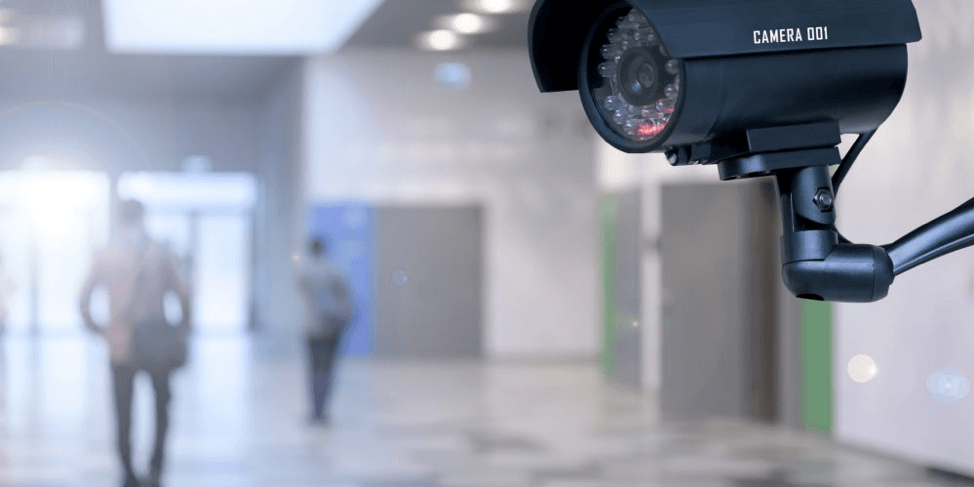
Video surveillance remains a cornerstone of layered security, providing both real-time monitoring and recorded footage for post-incident investigations. Cameras positioned at entry points and throughout facilities capture footage that can confirm identities, detect suspicious activity, and support investigations. When integrated into the ecosystem, video surveillance links footage directly to access events, enabling security teams to respond quickly and accurately.
Modern video surveillance solutions leverage artificial intelligence for real-time monitoring and analytics-driven detection of unusual activity or potential threats. AI-powered features include automated detection of suspicious behavior, object classification distinguishing people from vehicles, and immediate alerts that allow security professionals to respond as events unfold rather than after the fact. Remote access to live feeds and recorded footage ensures that situational awareness extends beyond the physical location of your security team.
Concealed Weapons Detection for High-Traffic Entry Points
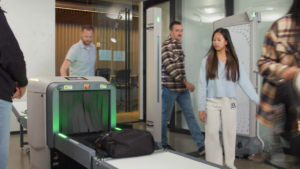 In environments with elevated security concerns, concealed weapons detection provides an additional layer of protection at key entry points. These systems are designed to identify hidden threats without impeding the flow of authorized personnel, making them well suited for schools, hospitals, government facilities, and large commercial venues.
Integrating concealed weapons detection with access control and video surveillance creates a comprehensive security checkpoint that deters and detects potential threats before they enter the facility. Motion sensors and intrusion detection systems can further enhance entry point security, enabling rapid response to suspicious activity and unauthorized access attempts.
Two-Factor Authentication Bridging Physical and Logical Access
Two-factor authentication (2FA) strengthens security by requiring users to provide two forms of verification before gaining access. In a layered security ecosystem, 2FA can bridge physical and logical access controls, ensuring that individuals are authenticated both at the door and within the systems they need to operate. For corporate organizations, this connection between physical and logical access is one of the most important and most frequently overlooked layers. An employee might badge into a restricted server room and then face a second authentication requirement before accessing the systems inside, creating two independent checkpoints that a stolen credential alone cannot defeat.
Biometric authentication, including fingerprint readers and facial recognition systems such as the FaceDeep series, adds a further layer by tying access to individual physical characteristics that cannot be shared or duplicated. This is particularly relevant in manufacturing environments where buddy-punching and shared credential use can create both operational and security risks. Pairing biometric authentication with ID-based access control means that the person scanning in is verifiably the person authorized to be there. This layer also protects sensitive data by adding a verification step before users can reach the information systems in areas they have physically entered. When physical access controls and logical access authentication are connected, the entire security ecosystem becomes more resilient against both external threats and internal misuse.
How a Layered Ecosystem Works in Practice
The real power of a layered security ecosystem becomes apparent when these components work in coordination. When a credential is presented at an access point, the access control system validates the identity, the video surveillance system links footage to the event, and any anomaly triggers an immediate alert to security teams. A visitor management system logs the entry and creates a time-stamped record that supports both compliance requirements and ongoing incident response.
This coordinated response is what separates a true layered security strategy from a collection of independently managed tools. Each layer informs and strengthens the others, creating comprehensive protection that addresses threats at multiple stages rather than depending on a single point of failure.
Real-Time Control Across the Full System
Integration enables real-time monitoring and control across all security layers. Security professionals can respond immediately to alerts, adjust access permissions on the fly, and view live video feeds from a centralized platform. This capability enhances situational awareness and empowers teams to act decisively, reducing the impact of potential incidents and supporting a proactive rather than reactive security posture.
What a Layered Approach Protects
A layered security ecosystem safeguards not only physical assets but also the people and operations that depend on them. A layered security approach is essential for protecting critical infrastructure, business operations, and the individuals who rely on your organization every day. Understanding these protections highlights the value of committing to a comprehensive security strategy rather than addressing individual risks in isolation.
Protecting People
Ensuring the safety of employees, visitors, and contractors is the most important priority in any security strategy. The human layer is a critical and often overlooked component, making employee training and ongoing security awareness essential for building a security-conscious culture.
In corporate offices and manufacturing facilities, protecting people requires security that is both visible and intelligent. Layered physical security measures, including access control, video verification, concealed weapons detection, and visitor management, work together to prevent unauthorized entry and identify potential threats before they reach the people inside your facility. In high-traffic environments where hundreds of employees, contractors, and visitors move through entry points every day, the ability to verify identity, screen for threats, and maintain a real-time record of who is on premises is not a luxury but a baseline expectation.
Video surveillance with AI-powered analytics adds an active safety layer beyond access control. In manufacturing and industrial settings, AI-driven monitoring can verify that employees are following safety protocols, wearing required personal protective equipment, and operating within defined areas. This proactive capability supports worker safety beyond the security function and extends the value of the surveillance investment into day-to-day operations. A well-structured layered security approach creates an environment where people can focus on their work with confidence. Organizations should also invest in training programs that help staff recognize and report suspicious activity, support incident reporting processes, and reinforce a culture where security best practices are consistently followed.
Protecting Physical Assets
Physical assets, including equipment, inventory, and facilities, require vigilant protection against theft, vandalism, and unauthorized access. Implementing robust physical security measures, such as access controls, video surveillance, and secured entry points, is essential for protecting critical assets and maintaining business operations. A layered ecosystem provides multiple checkpoints and monitoring layers that deter criminal activity and enable rapid response when incidents occur.
Regular reviews of video surveillance coverage for blind spots, analysis of security incident reports for patterns, and periodic assessments of access control permissions all contribute to maintaining a strong security posture. These security best practices ensure that physical security measures remain effective as facilities, staff, and operational needs evolve.
Protecting Operational Integrity and Data
Operational continuity depends on maintaining secure environments and controlled access to sensitive areas. Layered security supports this by regulating who can enter critical spaces, creating detailed records of access and activity, and providing the audit documentation that compliance requirements demand. When physical access controls are paired with multi-factor authentication, organizations can better safeguard sensitive information and the systems that store and process it.
Structured incident reporting and documentation are also vital, helping organizations log security events, analyze patterns over time, and make informed improvements to their layered security strategy. This ongoing evaluation ensures that security measures remain aligned with the threat landscape and the evolving needs of the organization.
Building the Right Ecosystem for Your Organization
Every organization’s security needs are unique, making a tailored layered security ecosystem essential. To effectively address evolving security threats, it is crucial to implement security best practices, establish and regularly update security policies, and consult with security experts who can assess vulnerabilities and recommend the right combination of solutions for your environment. Our approach focuses on understanding your specific requirements and designing integrated security solutions that fit your facility, your operations, and your budget.
There Is No One-Size-Fits-All Approach
Security challenges vary widely based on industry, facility size, risk profile, and operational priorities. A layered security approach must be tailored to protect business operations effectively, ensuring that critical systems and processes remain resilient against emerging threats. This means selecting the right combination of solutions and ensuring they integrate smoothly to support your long-term security strategy.
A retail store faces different security priorities than a healthcare facility or a school district. The layered security solutions that work in a single-building corporate office will look different from those needed across a multi-site enterprise. What remains consistent is the principle that each layer should reinforce the others and that the ecosystem as a whole should be greater than any individual component.
How We Design Integrated Solutions
Our team works closely with customers to analyze their current security posture, identify gaps, and develop a layered strategy that aligns with their specific needs. Security experts on our team assess vulnerabilities and develop a comprehensive security strategy tailored to each organization, ensuring both physical assets and the people who depend on them are protected.
We design integrated systems that combine ID issuance, access control, video surveillance, and additional layers such as concealed weapons detection and visitor management into a cohesive whole. Throughout the process, we prioritize scalability, ease of use, and long-term support so that organizations can grow and adapt confidently as the threat landscape evolves.
Start the Conversation About Your Security Needs
Building a layered security ecosystem begins with understanding where you are today and where you need to be. Schedule a 15-minute discovery call with our team to discuss your challenges and objectives. Together, we can identify the right solutions and integration paths to strengthen your security posture.
To get started, fill out our interest form at elliottdata.com/interest, call us at 888-345-8511, or email identity@elliottdata.com.
How AI Analytics and Automation Are Transforming Physical Security
Physical security is evolving beyond traditional video surveillance and manual monitoring. Artificial intelligence analytics and automation are enabling organizations to move from passive observation to active intelligence, improving safety, operational efficiency, and the speed and accuracy of security decisions. In this second part of our series on layered security, we explore how AI-powered video analytics are reshaping physical security systems and what that means for your organization’s security strategy.
The first section above covers the layered security ecosystem that forms the foundation of effective physical security. The final section below focuses on integrating video surveillance and access control into a unified security platform.
The Shift From Passive Monitoring to Active Intelligence
Traditional security camera systems have long relied on human operators to watch video feeds and respond to incidents. This approach is resource-intensive, prone to fatigue, and fundamentally reactive rather than proactive. As organizations manage more cameras across multiple locations, the limitations of manual monitoring become increasingly difficult to overcome.
How Traditional Video Surveillance Has Worked
Conventional video surveillance involves recording video footage that security personnel review either live or after an event occurs. Monitoring requires constant attention and is subject to human error, with many incidents going unnoticed or detected too late for an effective response. The sheer volume of raw data generated across a modern camera system can overwhelm security teams, making it difficult to extract valuable insights efficiently and consistently.
Traditional surveillance systems also struggle with false alarms. Motion-triggered alerts that fire for every passing vehicle or routine employee activity consume staff time and reduce confidence in the system over time. When alerts become noise, genuine potential threats are easier to miss.
What AI Changes About Monitoring and Response
AI video surveillance analytics transform how organizations interact with their camera feeds by continuously analyzing video footage in real time, identifying potential threats, unusual behaviors, and safety incidents without requiring constant human attention. Automated processes generate instant alerts and enable automated responses, allowing security teams to act faster and more accurately. By dramatically reducing false positives, AI-powered video analytics ensure that alerts represent genuine events worth investigating, restoring confidence in the system and improving the overall security posture of the organization.
This shift allows organizations to gain actionable insights from video data that would otherwise go unanalyzed. Rather than treating video surveillance purely as a recording system, AI tools enable it to function as a continuous intelligence layer that actively supports decision-making across both security and operations.
The Difference Between an AI Feature and an AI-Driven System
Not all artificial intelligence in security operates the same way. Some solutions offer isolated AI features embedded in individual cameras or software modules, while others provide fully AI-powered systems that integrate intelligent video analytics, automation, and real-time video analytics alerts across the entire surveillance system. Understanding this distinction helps organizations evaluate whether a solution will deliver comprehensive, scalable outcomes or simply add a narrow capability to an otherwise passive system.
An AI-driven surveillance system applies machine learning algorithms and computer vision continuously across all your cameras, building context over time and improving detection accuracy through continuous learning. A system with isolated AI features may flag individual events but cannot correlate them across camera feeds or adapt to your specific environment the way a fully integrated AI platform can.
What AI Video Analytics Can Actually Do
The capabilities delivered by modern AI video analytics extend well beyond basic motion detection. Understanding what these systems can do in practice helps organizations identify where they would provide the most value across their specific facilities and operations.
Object and Behavior Detection
At the core of how AI video analytics work is computer vision, the ability of AI systems to interpret and classify what they see in a video feed. Advanced video analytics platforms can distinguish between people, vehicles, and objects, track movement patterns across camera feeds, and detect behaviors that fall outside defined parameters. This allows security teams to configure alerts based on specific scenarios, such as a person entering a restricted area, a vehicle loitering near a perimeter, or an object left unattended in a high-traffic space.
Behavioral detection goes beyond identifying what an object is to understanding what it is doing. AI-powered systems can recognize when someone is moving in an unusual direction, lingering in a sensitive area, or approaching an access point in a way that warrants attention. These capabilities support proactive security by surfacing potential threats before they escalate into security incidents.
License Plate Recognition
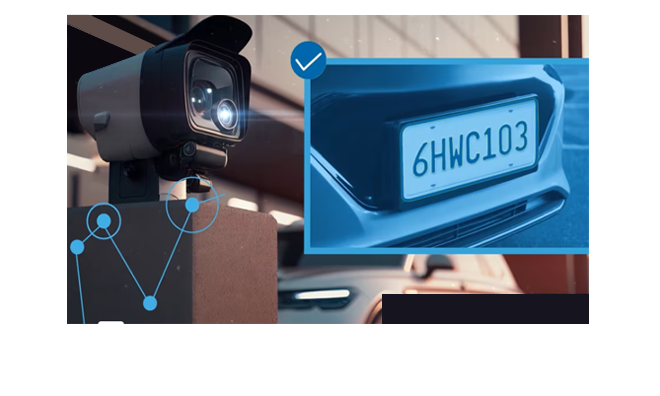
License plate recognition is one of the most practically valuable capabilities available in modern AI video surveillance systems. By automatically reading and logging license plate data from camera feeds, these systems enable organizations to monitor vehicle access, identify unauthorized vehicles, and maintain searchable records of all vehicle activity across a facility.
For organizations managing parking areas, loading docks, perimeter gates, or vehicle-access entry points, license plate recognition transforms raw video footage into structured, actionable intelligence. Security teams can configure automated responses when a flagged plate is detected, receive instant alerts for vehicles of interest, and access historical data on vehicle activity to support investigations.
Facial Recognition and Biometric Verification
Integrating AI-powered facial recognition with access control systems improves identity verification and streamlines entry processes at high-security locations. These systems provide secure, touchless authentication while supporting the audit trails and accountability records that compliance requirements demand. When a person presents a credential at an access point, facial recognition can confirm that the credential belongs to the person presenting it, adding a meaningful layer of verification that traditional card readers cannot provide.
As with all biometric systems, deployment requires careful attention to applicable privacy regulations. Our team guides customers through the compliance considerations relevant to their industry and location before implementing facial recognition capabilities.
Safety Protocol and Compliance Monitoring
One of the most valuable and often underutilized capabilities of AI video analytics is safety monitoring in operational environments. In manufacturing plants, warehouses, construction sites, and industrial facilities, AI-powered cameras can verify that employees are wearing required personal protective equipment, following defined movement protocols, and operating within designated areas. Rather than relying on periodic manual inspections, these systems monitor compliance continuously and generate immediate alerts when a violation is detected.
This operational safety layer extends the value of the video surveillance investment well beyond traditional security applications. The same cameras that protect against unauthorized access can simultaneously support worker safety programs, reduce liability exposure, and provide documentation for safety audits and regulatory compliance reviews.
Real-Time Alerts and Automated Responses
One of the most significant operational benefits of AI video analytics is the ability to generate real-time alerts and trigger automated responses without requiring a human operator to be watching every feed at every moment. When the system detects activity that matches a defined alert condition, it can simultaneously notify security personnel, log the event with a video timestamp, and in integrated environments, trigger a coordinated response from access control or other connected systems.
This capability is what makes the difference between a reactive and a proactive security operation. Rather than discovering an incident in recorded footage after the fact, security teams receive instant alerts that allow them to respond as events unfold. Over time, the combination of real-time detection and historical data creates a feedback loop that supports smarter incident management and continuous improvement.
Operational Analytics Beyond Security
AI video analytics deliver value that extends well beyond traditional security applications. Organizations can use video data to analyze customer behavior, monitor foot traffic patterns, measure occupancy across different areas of a facility, and identify operational inefficiencies. In a retail environment, this means understanding how customers move through a store. In a corporate office, it means optimizing space utilization. In a manufacturing plant, it means monitoring throughput at stations and identifying bottlenecks in real time.
This operational intelligence makes AI video analytics a business efficiency tool as much as a security tool, improving the return on investment for organizations that deploy them thoughtfully.
Custom Video Analytics Without the Technical Barrier
Deploying AI video analytics has traditionally required specialized technical expertise, lengthy setup processes, and significant investment in custom development. A significant recent development in the field is changing that dynamic by making sophisticated AI video analytics accessible and configurable for any organization, without requiring a development team or AI expertise.
Eagle Eye Networks, Brivo, and the Eeva Video Agent
 Eagle Eye Networks, a cloud-based video management platform that Elliott Data Systems, Inc. carries, recently merged with Brivo to expand the capabilities of the Eagle Eye VMS. One of the most significant additions to come from that partnership is Eeva, an AI-powered video agent integrated directly into the Eagle Eye platform.
Eeva continuously monitors all your cameras to detect specific situations based on prompts that users define in plain language. Because it is pre-trained on large language models and large vision models, Eeva requires no coding, no AI expertise, and no lengthy setup process. Users simply describe what they want to watch for and how often to check, and Eeva begins real-time detection immediately. What previously required a software development team and months of custom work can now be configured in minutes.
This approach addresses one of the most common frustrations with traditional AI video analytics: generic, predetermined alert types that may not align with the specific scenarios an organization actually needs to monitor. With Eeva, the analytics are as specific as the prompts you write. If you need to know when a package is blocking an emergency exit, when a vehicle is parked in a restricted zone, or when an employee is not wearing required safety gear in a specific area of your facility, you describe it and Eeva watches for it.
Use Cases Across Industries
The flexibility of a prompt-based AI video analytics system like Eeva makes it well suited for the diverse environments Elliott serves.
- In manufacturing and industrial facilities, Eeva can verify that personal protective equipment is present and in use on the floor, monitor adherence to safety protocols in specific work zones, and flag hazardous situations such as blocked exits or improperly stored materials before they create compliance or safety issues.
- In construction environments, the same technology can monitor site access, verify that safety standards are being followed in active work areas, and generate alerts when personnel enter restricted zones without authorization.
- In corporate offices and commercial facilities, Eeva can monitor for unusual activity after hours, track access to sensitive areas, and support operational goals like occupancy monitoring and space utilization analysis.
- In retail and food service environments, the system can ensure cleanliness and safety standards are being maintained, monitor high-value inventory areas, and verify that operational procedures are being followed consistently across locations.
How This Changes the ROI Equation for Video Surveillance
By reducing deployment time, eliminating the need for specialized AI skills, and enabling organizations to configure analytics specific to their actual operational needs, this type of AI video agent fundamentally improves the return on investment for video surveillance. Organizations can address new monitoring needs immediately rather than waiting for software updates or custom development cycles that can take months or years.
This responsiveness is one of the most meaningful advantages of this type of AI video agent: the ability to empower security teams to be more responsive, work more efficiently, and enhance monitoring in a way that results in working smarter rather than harder.
Elliott’s AI-Capable Video Surveillance Platforms
We work with leading video surveillance platforms that incorporate AI-powered analytics, giving our customers access to intelligent video capabilities without requiring them to replace their existing infrastructure in most cases.
Eagle Eye Networks Cloud VMS with Eeva
Eagle Eye Networks is a cloud-based video management system that supports AI-powered video analytics across all your cameras from a centralized, browser-accessible platform. With the addition of Eeva following the Eagle Eye and Brivo merger, the platform now offers custom prompt-based AI detection that allows users to configure real-time alerts and automated responses for virtually any scenario, without technical expertise or coding.
Because Eagle Eye is cloud-native and camera-agnostic, organizations can extend AI capabilities to their existing camera infrastructure rather than starting over. The platform enables management of camera feeds, footage review, and alert monitoring across multiple locations from a single unified dashboard, with continuous updates that improve capabilities over time through ongoing machine learning.
Vortex AI
Vortex AI brings machine learning-driven analytics to video surveillance with a focus on intelligent, scalable deployment across commercial and enterprise environments. The platform’s AI tools support threat detection, behavioral analysis, and automated alerts, enabling security teams to move from monitoring raw data to acting on actionable intelligence. Vortex AI integrates with access control systems to create coordinated responses when camera and access data intersect.
Vivotek VAST Security Station
Vivotek’s VAST Security Station supports AI-enhanced detection across Vivotek’s broad camera hardware range. VAST incorporates smart surveillance features including intelligent video analytics, event-based search, and real-time alerts, making it well suited for organizations that prefer a managed on-premises or hybrid environment. Its ability to manage large camera deployments from a single interface gives security teams centralized visibility without sacrificing local control.
Cloud, On-Premises, and the Right-Fit Approach
Choosing between cloud and on-premises deployments for AI video surveillance depends on organizational needs, existing infrastructure, regulatory requirements, and operational priorities. The transition toward cloud solutions has been significant over the past several years, but there remains a meaningful place for on-premises deployments, and not every customer needs to prioritize mobility or cloud-based analytics. The ability to support both approaches is precisely what allows us to deliver a right-fit solution for each customer.
How Cloud Platforms Enable Greater AI Capability
Cloud-based video surveillance software platforms provide scalable AI processing power, enabling advanced video analytics, seamless updates, and centralized management across multiple locations without requiring on-premises servers dedicated to video processing. For organizations with multiple facilities or distributed security teams, cloud platforms offer instant access to all camera feeds and historical data from any authorized device.
Where On-Premises Still Has a Place
On-premises solutions offer direct control over video data and infrastructure, which is critical for organizations with strict compliance requirements, limited or restricted internet connectivity, or significant existing hardware investments they want to protect. On-premises deployments can also reduce latency for real-time video analytics in environments where response speed is a priority.
Our Team’s Approach: Supporting Both
Elliott Data Systems’ team supports customers with both cloud and on-premises AI video surveillance solutions, tailoring deployments to fit each organization’s operational and regulatory environment. Where a hybrid approach makes sense, combining cloud analytics with on-premises storage or local management, we design solutions that deliver the best of both. The goal in every case is the right fit, not the default.
What to Consider When Evaluating AI-Enhanced Security
Adopting AI video surveillance analytics and automation requires careful planning and alignment with your organization’s security goals and operational realities.
Start With the Problem You Are Trying to Solve
Identify the specific security or operational challenges you face before evaluating AI-powered video analytics solutions. Are false alarms consuming your security team’s time? Are there areas of your facility that lack adequate coverage? Are you trying to monitor safety protocol compliance in a manufacturing environment, reduce manual monitoring burden, or gain operational insights from your existing cameras? Understanding your objectives ensures the technology you select addresses real needs and delivers measurable outcomes.
Understand How the System Integrates With What You Already Have
Evaluate how AI video analytics platforms will work with your existing cameras, access control systems, and security infrastructure. Solutions designed to work with existing systems, including camera-agnostic platforms like Eagle Eye with Eeva, reduce deployment costs and complexity. Our team assesses your current environment during the discovery process to ensure that any AI-enhanced solution we recommend adds genuine capability rather than requiring a full infrastructure replacement.
Think About Scalability and Long-Term Support
AI systems require ongoing attention to remain effective. As your facility grows, your operational priorities shift, or new monitoring needs emerge, your video analytics configuration will need to evolve alongside them. Choose a platform and a partner that can support those changes over time. Our team provides long-term support after deployment, including system updates, configuration adjustments, and training so your security teams are confident and capable users of the AI tools they have.
Speak With a Solutions Specialist
Integrating AI video analytics into your physical security ecosystem is a meaningful investment, and the right guidance makes the process significantly more straightforward. Our team is ready to help you evaluate your options, understand platform capabilities, and design a deployment strategy that fits your environment and your goals.
To start the conversation, fill out our interest form at www.elliottdata.com/interest, call us at 888-345-8511, or email identity@elliottdata.com.

Why Your Integrated Video Surveillance and Access Control Should Work Together
Organizations evaluating modern security infrastructure are often presented with two different visions of how video surveillance and access control should operate. One vision is a fully integrated system where both technologies are managed from a centralized platform with unified controls. The other is a layered, defense-in-depth approach where access control and video surveillance operate as more independent systems that work together powerfully through advanced AI-driven features, smart credential technology, and well-trained security teams.
The truth is that both approaches have real value, and the right choice depends on your organization’s environment, operational needs, and security strategy. In this final section, we focus on how video surveillance and access control work together effectively under either approach, and how the right combination of integrated tools and layered security technologies closes security gaps that neither system can fully address alone.
Two Effective Approaches to Coordinating Access Control and Video Surveillance
The Fully Integrated, Centralized Approach
For organizations that want the most streamlined operational experience, fully integrated access control and video surveillance systems can be managed together from a centralized platform. This approach delivers seamless integration between the access control system and video security platform, providing real-time alerts that combine access control data and video feeds in a unified interface, with coordinated automated responses across both systems. Security teams operating in this environment work from a single integrated solution that handles cross-referencing automatically and surfaces relevant footage alongside corresponding access events.
This is where security technology is headed for many enterprise environments, and it is the right fit for organizations that prioritize centralized management, can support the infrastructure required for full integration, and want maximum automation in their incident response workflows.
The Layered, Defense-in-Depth Approach
Not every organization needs or benefits from full centralized integration. For many businesses, a layered security strategy that combines access control, video surveillance, ID badge issuance, 2FA, and smart card technology as more independent but coordinated systems delivers excellent results, particularly when each technology incorporates modern AI-driven features. In this model, the access control system and video surveillance system are managed from their own platforms, but the security teams using them benefit from advanced search, AI-powered notifications, real-time monitoring, and smart credential technology that work together to support fast, accurate incident response.
This layered approach often suits organizations that have invested in best-in-class access control and video surveillance solutions individually, or that want flexibility in how they configure and evolve their security infrastructure over time. It also remains the practical reality for many organizations today, even as the security industry moves toward more centralized integration.
Both Strategies Reduce Security Gaps
The most important point is that both approaches close the security gaps that arise when access control systems and video surveillance systems operate in complete isolation. Whether through fully integrated automation or layered coordination supported by AI-driven features and well-trained security personnel, both strategies deliver meaningful improvements to security posture and operational efficiency.
The right choice for your organization depends on factors including the size and complexity of your environment, the maturity of your existing security infrastructure, your team’s operational preferences, and your long-term security strategy. There is no single right answer, and we work with customers across both approaches.
How a Layered Approach Looks in Practice
To make the layered approach concrete, consider the following scenario at a commercial facility after hours.
An After-Hours Incident Unfolds
An unauthorized person approaches an access-controlled door using an employee ID badge they stole earlier in the day. The integrated access control system detects the credential presentation after business hours and generates a real-time alert to security personnel. Simultaneously, the video surveillance system captures activity at the property and begins tracking the subject’s movement.
Modern AI-driven video surveillance integration features track the vehicle from the moment it enters the property using camera 1, then automatically link the footage as the subject moves across the property from one camera to the next. AI-enhanced license plate recognition captures clear shots of the vehicle and its plates even in low-light conditions, supported by night vision technology that ensures usable footage at any hour. As the subject reaches the access-controlled door, facial recognition features at that camera capture a clearer picture of the intruder.
2FA Stops the Attempt
 The company has implemented 2FA on its access-controlled doors, requiring not only the ID badge but also facial recognition verification from the cardholder’s smartphone. When the intruder presents the stolen card, the legitimate cardholder receives a 2FA notification on their phone, immediately realizing someone is attempting to use their credential. The 2FA verification fails, and the access control solution denies entry. The intruder cannot gain access to the facility.
This is why smart card technology and 2FA matter as layers within the broader security system. The encrypted smart card cannot be cloned, the 2FA requirement adds a second authentication factor, and the layered combination stops the intrusion attempt even though the physical credential was compromised.
Real-Time Response From the Security Team
While the incident unfolds, the security team uses remote monitoring to watch the activity in real time from the video surveillance software accessed on their smartphones. Using mobile access to the access control software from the same devices, they identify which employee ID was scanned at that door during that exact time. They terminate that card’s access permissions instantly across the building, all from their mobile devices, due to the integration of ID badge issuance and access control system management.
This response capability requires the access control system and video surveillance system to share enough data to support efficient cross-referencing, but it does not require a single centralized platform. Both systems operate from their own software interfaces. The security team’s effectiveness comes from an integrated security system that has layered combinations of access control, video surveillance, AI-driven features, and smart credential technology, all supported by their ability to access both systems remotely.
AI-Powered Post-Incident Investigation
After the incident, security staff search the video surveillance system for previous footage of a person or vehicle matching the descriptions captured during the event. Using AI-enhanced descriptive search features within the video surveillance software, they enter simple text-based search terms and locate relevant footage in seconds. This allows them to determine whether the unauthorized person was previously casing the property, attempted to clone an employee ID card in passing, or stole the badge in question.
In this case, an earlier attempt to clone the employee badge was unsuccessful because the company issues encrypted smart cards rather than easily duplicated proximity cards. The smart card technology, layered with 2FA, layered with AI-driven video surveillance, layered with mobile access to both platforms, created a defense-in-depth security environment that performed effectively even though the access control system and video surveillance system were not managed from a single centralized platform.
This is the layered, defense-in-depth approach delivering real results.
How a Fully Integrated Approach Compares
In a fully integrated centralized environment, the same scenario would unfold somewhat differently from the security team’s perspective. The access control event and video surveillance alerts would surface in a unified interface, with automated cross-referencing happening at the platform level. Response actions across both systems could be triggered from the same dashboard, and automated responses could be predefined for specific event types.
For organizations that benefit from this level of automation and want maximum operational efficiency in their incident response workflows, fully integrated access control and video surveillance systems are a strong fit. The reduced manual coordination and unified management can be particularly valuable for large enterprises managing security across multiple locations or for environments where rapid, automated responses are mission-critical.
The key point is that the same advanced AI features supporting the layered scenario above are also present in fully integrated environments. The difference is in how the systems are managed, not in the core capabilities each technology provides. Both approaches benefit from AI-driven activity tracking, automated notifications, smart credential technology, and the security team’s ability to respond quickly using modern tools.
The Role of Smart Credential Technology and 2FA
Both the integrated and layered approaches benefit significantly from the security improvements that smart credential technology and 2FA provide. These are not specific to either model. They are foundational layers that strengthen the entire security ecosystem.
Smart Cards vs. Proximity Cards
Traditional proximity cards rely on relatively simple technology that can be cloned with widely available equipment, creating a real security vulnerability for organizations that use them. Encrypted smart card credentials use cryptographic technology that prevents cloning, dramatically reducing the risk that a compromised credential or a brief moment of proximity to a bad actor can result in unauthorized access. For organizations evaluating their security strategy, upgrading from proximity cards to smart cards is one of the most impactful changes available.
2FA on Access-Controlled Doors
2FA at access-controlled doors adds a second authentication factor beyond the physical credential, typically requiring confirmation through a smartphone or biometric verification. As the scenario above illustrates, 2FA can be the deciding factor that stops an intrusion even when the physical credential has been compromised. It also alerts the legitimate cardholder that their credential is being used, providing real-time visibility into potential security issues that traditional access control alone cannot deliver.
ID Badge Issuance Integrated With Access Control
When ID badge issuance is integrated with the access control system, security teams can revoke compromised credentials instantly, issue new ones quickly, and maintain accurate, current credential records across the organization. This integration is foundational to both centralized and layered security strategies and is part of why coordinated identity management is one of the most important investments an organization can make in its overall security infrastructure.
What Modern AI Features Bring to Both Approaches
The advanced AI features that make both fully integrated and layered approaches effective today did not exist at the same capability level a few years ago. Their availability is one of the reasons that even more independent access control and video surveillance systems can deliver excellent coordinated results when paired thoughtfully.
AI-Driven Activity Tracking Across Camera Feeds
Modern video surveillance systems can automatically track a person or vehicle as they move across the property, linking footage from one camera to the next without manual searching. This capability dramatically reduces the time security teams spend reconstructing the path of an incident and provides a complete visual record of events that would previously have required manual review of multiple camera feeds.
Real-Time Notifications From Both Systems
When access control and video surveillance both generate real-time notifications during an incident, security teams gain the situational awareness they need to respond effectively, even when the two systems are managed from separate platforms. Mobile access to both systems means security personnel can monitor and respond from anywhere, not just from a dedicated workstation.
AI-Enhanced Smart Search Within the Video Surveillance Platform
Smart search features within modern video surveillance software allow security teams to use simple descriptive search terms, such as “person in red jacket” or “white pickup truck,” to locate relevant footage in seconds rather than manually reviewing hours of recordings. This capability is transformative for post-incident investigations and is a meaningful operational improvement regardless of whether the video surveillance system is centrally integrated with access control or operating as a more independent component of a layered security strategy.
License Plate Recognition and Night Vision Enhancement
AI-enhanced license plate recognition combined with night vision technology means that vehicle activity at the perimeter of a property can be captured with clarity at any hour. These features support both perimeter security monitoring and post-incident vehicle identification, adding another valuable layer to the overall security ecosystem.
How We Help Customers Choose the Right Approach
Some customers are a strong fit for fully integrated access control and video surveillance solutions. Others get better results from a defense-in-depth strategy that combines independently managed systems with smart credential technology, 2FA, AI-driven features, and integrated ID badge issuance. Our team supports both strategies and works with each customer to identify which approach best fits their environment.
Designing the Right Security Strategy for Your Organization
The right approach depends on the size and complexity of your facility, your existing security infrastructure, your team’s operational preferences, your compliance requirements, and your long-term goals. Some environments call for the centralized control and automated responses of full integration. Others benefit more from the flexibility and best-in-class component selection that a layered approach provides. Many organizations end up somewhere in between, using integrated software where it makes the most sense and operating other components more independently with strong AI-driven coordination.
Long-Term Support for Either Strategy
We work with customers across both approaches, providing the access control systems, video surveillance solutions, smart card credentials, 2FA capabilities, ID badge issuance integration, and training that supports either security strategy. Our goal is to help each organization implement the security model that best serves its needs today while remaining adaptable as both technology and operational priorities evolve over time.
Start the Conversation
To discuss your organization’s access control and video surveillance environment and explore which approach is the best fit, fill out our interest form at elliottdata.com/interest, schedule a 15-minute discovery call, or reach our team at 888-345-8511 or identity@elliottdata.com.
Solutions. Support. Results.